
Your contractor may say the work is complete. The copper tube is inside the walls, the terminal units look ready, and every gas outlet is fitted. Still, that does not mean the medical gas pipeline system is ready for patients.
Medical gas pipeline testing and commissioning proves that the system delivers the right gas, at the right pressure, to the right outlet, with no leaks, debris, or dangerous wrong connections. This is not a paperwork formality before handover. It is a patient safety requirement.
Petty reviewed US pipeline-related deaths and reported 26 deaths linked to crossed pipelines, defective connectors, and supply errors. The evidence is clear: a neat-looking MGPS can still fail dangerously.
Validation and Verification Are Not the Same
HTM 02-01 uses the term validation and verification (testing and commissioning), but these are two separate responsibilities.
The installer performs validation. They show that the MGPS installation follows the approved design and works as intended. A certified verifier then carries out verification independently. This person should not have built the system. That separation matters because the hospital needs an impartial check before it accepts the work.
The 9 tests follow a set order under NFPA 99 and ASSE 6030. Each result depends on the test before it. A final flow test means little if the pipeline identity was never proven.
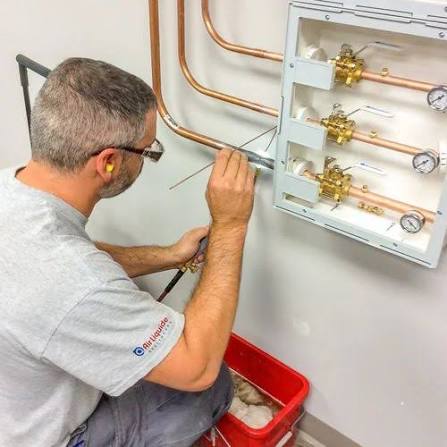
The 9 Tests Before Handover
1. The 9 Tests Before Handover
The initial pressure test happens after the pipeline carcass is installed but before concealment. Every joint remains visible. The line is tested at 1.5 times the working pressure: at least 150 psig (1,035 kPa) for pressurised systems and 60 psig (415 kPa) for vacuum. A weak joint found now is simple to repair. The same leak found after finishing work may require opening a wall.
2. Standing pressure test
For the standing pressure test, the system stays under Nitrogen NF at 20% above working pressure for 24 hours with valves closed. The pressure gauge should not fall. The certified verifier also repeats a shorter 10-minute version at operating pressure.
A quick check can miss a slow leak. A full-day test gives the hospital much stronger proof of system leakage control.
3. Cross-connection test
The cross-connection test prevents one of the most serious MGPS hazards. Each system is brought to atmospheric pressure. One system receives Nitrogen NF at 50 psig (345 kPa), and the team checks every terminal unit to confirm the test gas appears only where it should.
The initial cross-connection test also checks colour coding, labelling, and identity checks against the real pipework. Oxygen must never emerge from a nitrous oxide outlet. A wall label alone proves nothing until gas identification confirms what is inside the line.
The team should check each zone valve box, dual circuit, area gas valve box, and area valve service units. Praun Metal verifies zones against approved drawings, not only labels, during every MGPS installation.
4. Valve test
The valve test confirms that every line valve and AVSU closes the correct service and isolates the correct area. Area valve service units must control the terminal units inside their stated zone. In an emergency, staff need to isolate one ward without stopping supply to another ward.
5. Alarm test
A medical gas alarm system must respond to a genuine fault condition, not simply look active on a panel. Area alarms and master alarms need both audible and visual warnings for pressure deviation. Staff may hear an alarm before they see the display, so both signals matter. Medical gas alarm systems form an important part of this safety chain.
6. Piping purge test
The piping purge test removes loose material from the pipe. Gas is discharged from each outlet at a minimum interrupted rate of 8 scfm (225 Nl/min). A clean white cloth held at the outlet should show no discoloration. This simple test can reveal brazing debris before the system enters service.
7. Piping particulate test
The piping particulate test finds particles too small to see. The tester passes 35 cubic ft of Nitrogen NF at 3.5 scfm through a 0.45-micron filter across 25% of zones. The filter must not collect more than 1 mg from any outlet tested.
8. Piping purity test
The piping purity test checks remote outlets for dew point, total hydrocarbons, methane, and halogenated hydrocarbons. Medical air purity needs special care because the hospital produces medical air on site. This contaminant testing confirms that the gas remains suitable before clinical use.
9. Operational pressure test
The operational pressure test proves that the system can support real demand at the same time across the building.
| Test | Pass criteria |
| Flow test at terminal units | Not less than 100 L/min, or 140 L/min nitrogen |
| Pressure drop | Not more than 35 kPa |
| Vacuum | Maximum 13 kPa (4″ Hg) drop |
| Line pressure | Around 400 kPa static |
A final tie-in test applies whenever new pipework joins a live system. Every new joint needs testing at operating pressure before gas flows. Design flow performance, system leakage, vacuum leakage, purging and filling, and reverification after repairs or extensions must all appear in the final file.
Standards Behind MGPS Testing in India
For MGPS in hospital in Kolkata and across India, consultants need to use the right standards together.
- IS 7396 supports design and pressure requirements.
- ISO 7396-1:2016 covers design, installation, performance, testing, commissioning, documentation, alarms, and protection against wrong gas connections.
- HTM 02-01 provides the validation, verification, and paperwork process.
- NFPA 99, the Health Care Facilities Code, informs the verifier test approach. The currently published edition is 2024; the 2027 edition is still in development.
- NABH and its Hospital Accreditation Standards expect safe gas supply, testing, alternate sources, trained staff, and maintenance records.
Your NABH standards for MGPS records should show proper installation, working AVSUs, safety alarms, labelling, and routine medical gas testing. Where the project requires three independent supply sources, test the reserve supply properly. A manifold system certificate alone does not prove that its changeover test will work during a real shortage.
Who Tests, Witnesses, and Signs?
The installer completes validation and records results. The certified verifier performs verification. A qualified pharmacist signs off gas quality where applicable. The Authorised Person (MGPS) witnesses the completed work and authorises the system for use.
Only after that approval should the “Danger, do not use” labels come off the terminal units.
If you are searching for medical gas installers near me in Kolkata, ask one key question before discussing price: who signs the handover, and what qualifies them to sign? Praun Metal confirms this in writing before work begins and supports its work with LRQA certification.
Paperwork That Makes Handover Defensible
HTM 02-01 uses forms B0 to B16. B0 is the summary of tests. B1 and B2 cover the pipeline carcass, labelling, marking, supports, leakage, and cross-connection work. B3 to B12 cover system leakage, vacuum leakage, AVSUs, line valve checks, terminal units, NIST connector function, design flow performance, alarms, supply systems, and drawings.
B13 to B16 complete the file with purging and filling, quality, gas identification, and the certificate of completion. Before releasing final payment, request the permit-to-work record, as-fitted drawings, as-built drawings, safety valve certificates, and ongoing maintenance records.
Where Handover Usually Goes Wrong
Problems often start when teams rush the last stage. Non-medical compressors can contaminate the line. Purging after identity checks can invalidate the result. Testing only selected medical gas outlets can leave a wrong connection hidden in an untested room.
Hospitals should also run mock drills of pipeline failure, fire, and explosion after handover. Your staff should not face a live emergency for the first time without practice. A focused hospital audit can identify missing records and unproven safety controls before they become a clinical risk.
Sign With Confidence, Not Hope
A compliant MGPS system is not one that simply looks finished. It is one with witnessed tests, clear records, and qualified people who stand behind the result.
Praun Metal provides medical gas pipeline installation, MGPS installation service, commissioning, hospital audit, and AMC support for hospitals and medical colleges across Kolkata, Mumbai, and Hyderabad. From copper tube supplied to EN 13348 to each medical gas outlet, we build for practical safety and proper scrutiny.
If your project is nearing handover, talk to our team or call 08240853155 before you sign.
Frequently Asked Questions
The 24 hours standing pressure test sets the minimum timeline. Most mid-size hospitals need one to two weeks for complete testing and commissioning of medical gas pipeline system work across every gas, zone, outlet, alarm, and supply source.
The installer carries out validation. An independent certified verifier should perform verification. A qualified pharmacist signs gas-quality results where required, while the Authorised Person (MGPS) witnesses the work and authorises use.
Validation is the installer proving that the medical gas pipeline system performs as designed. Verification is the independent confirmation that the work, records, and test results are correct before handover.
Leak testing and preventive checks should follow the hospital’s maintenance plan. Full reverification is essential after any modification, repair, extension, or nearby civil work that could affect the pipeline.
Request B0 to B16, the summary of tests, permit-to-work record, as-fitted drawings, as-built drawings, safety valve certificates, gas identification results, certificate of completion, and maintenance records.